Why Smart, Faithful People Stay Financially Stuck — And the Mindset Shift That Changes Everything
If you have ever done everything right — prayed consistently, given faithfully, worked hard — and still felt like something is keeping you from getting ahead financially, this teaching is for you. The problem is almost never your character or your faith. It is the financial framework you are operating from — one that was likely handed to you before you ever made a conscious choice about money.
In this first video of the Iyar series, I break down the three mindsets that shape every financial decision, name the invisible cord keeping even Spirit-filled people financially bound, and give you a diagnostic question that will tell you exactly where to start.
The Problem Is Not What You Think
Most financial coaching starts in the wrong place. It hands you a budget, a debt payoff strategy, or an investment plan — and none of those things are wrong. But they are being applied to a foundation that was never properly laid. And so they never quite work the way they should.
Here is what I have learned after years of working with ministry leaders, business owners, and faith-rooted families: financial struggle in a faithful person's life is almost never a character problem. It is an architecture problem.
Financial stuckness is rarely a character problem. It is an architecture problem.
The foundation I am talking about is mindset — specifically, the financial mindset that was handed to you before you ever made your first dollar. Not just what you think about money. The framework through which you see money, make decisions about money, and relate to money at a gut level. That framework was formed long before you had any say in it. And until it changes, no strategy will fully deliver what it promises.
The Three Mindsets
There are three frameworks through which people approach money. I call them the Barbaric mindset, the Greek mindset, and the Hebraic mindset. When the Spirit first revealed this framework to me and showed me how I had been operating in these things — it is what freed me. That is when John 10:10 opened up in a way it never had before. Jesus said I came that you might have life — and the Greek word there is perissos. Superabundance. Overflow. Not in one area. In everything.
The Barbaric Mindset
The Barbaric mindset is rooted in fear. It operates through intimidation, moves in greed, and seeks to control — whether that is people or resources. This is not a character indictment. This mindset is almost always the result of a survival season — a period of scarcity so prolonged that the only relationship with money became grabbing it before it disappeared, spending it before someone took it, holding it so tightly that generosity felt like danger.
Financially it looks like impulsive spending, hoarding, inability to give, and manipulation in financial relationships. Greed and lack are actually two expressions of the same fear: there is not enough. Survival thinking cannot build legacy. What gets consumed cannot be transferred.
The Greek Mindset
The Greek mindset is more subtle — and this is the one that catches most faithful, well-intentioned people. It plans without prophetic timing. It is analytical and reason-based, and it needs a lot of data before it will move. It separates the spiritual from the material — the soul matters, the body is suspect, heaven is real, earth is temporary. And money? Money belongs to the earthly realm, so we do not talk about it too seriously in spiritual circles.
This is why so many ministry leaders carry a hidden shame around finances. The Greek framework told them that wanting more was worldly. That wealth was a spiritual liability. That the truly holy person lives simply and lets God handle the rest. But that is not a biblical framework. That is Greek philosophy wearing a Christian costume.
The Greek mindset produces the most educated, financially paralyzed people in the room. They know what to do. They have known for years. But knowing and building are two entirely different things.
It looks like wisdom. It reads all the books. It attends all the workshops. But it will not move until it can see. And covenant faith requires moving before you can see. James 2:17 says faith without works is dead. The Greek mindset has a faith problem dressed up in wisdom's clothing.
The Hebraic Mindset
The Hebraic mindset says all of life is covenantal. Your finances are not separate from your faith — they are an expression of it. Prosperity is not a sign of compromise — it is a sign of covenant faithfulness operating in every domain. Spirit. Soul. Body. Life. Ministry. Industry. Everything flows together as one.
The Barbaric mindset asks: how much can I get? The Greek mindset asks: how much do I know? The Hebraic mindset asks: what can I build — and what will I leave?
This is the mindset of Joseph — who did not hoard the grain of the seven abundant years but built storehouses in every city, creating a multi-stream structure that saved his entire family. This is the mindset of the Proverbs 31 woman — who did not wait for permission to build. She considered a field and bought it. She planted a vineyard from her earnings. She had multiple income streams flowing from one faithful center. She was not waiting for conditions to be perfect. She was already building.
Deuteronomy 8:18 says He gives you the power to produce wealth — and it ties that power directly to covenant. This is not prosperity gospel. This is covenant stewardship. There is a profound difference.
The Three-Stranded Cord
Understanding the mindsets is important. But there is a deeper question — why are they so hard to break, even for people who pray, study, and are genuinely seeking God?
There is a three-stranded cord that works together to keep people financially bound. Three spiritual forces that reinforce each other and reinforce the wrong mindset.
The religious spirit makes passivity look like piety. It says: I am just trusting God. Money is the root of all evil. The Lord will provide. It dresses inaction in spiritual language and keeps people from taking covenant action.
The poverty spirit provides the identity reinforcement. It whispers: this is just who we are. It converts a curse into a cultural norm. It makes lack feel familiar — and increase feel dangerous or even sinful.
And unbelief provides the ceiling. Every time faith begins to rise, unbelief pulls it back down. It is not loud atheism. It is the quiet inner voice that says: that is for other people. Not for us.
The Hebraic mindset is the only framework that breaks all three strands simultaneously — because it brings faith and action together under covenant.
The Barbaric mindset feeds the poverty spirit. The Greek mindset feeds unbelief. The Hebraic mindset breaks all three strands simultaneously — because it brings faith and action together under covenant, in community, in alignment with God's timing and design.
You may have heard of the fixed mindset and the growth mindset from behavioral science. The fixed mindset assumes this is just how it is. The growth mindset believes things can change. But here is what that framework misses: you can have a growth mindset and still be bound — if your growth is Greek-framed. Analytical. Self-reliant. Data-dependent. Optimistic humanism expands — but it does not establish covenant. It grows — but it does not build legacy. The Hebraic mindset is the missing dimension.
The Iyar Anchor — Why This Season Matters
We are in the Hebrew month of Iyar — also called Ziv, which means radiance or brightness. The month between Passover and Shavuot. Between deliverance and covenant encounter. This is the month where God teaches His people how to live under what He has just revealed.
Iyar does not just carry healing. It carries the light that healing releases. You do not go through Iyar diminished. You come out of it brighter than when you entered.
Iyar is the wilderness month. After Israel came out of Egypt — after the bondage was broken, after Passover — they were not yet at Sinai. They were in between. The old was over. The new had not yet arrived. And in that in-between season, God was doing some of His most important formation work. He was teaching them to trust. He was dismantling the Egypt mindset and building a covenant one.
The first thing He did in that wilderness was take them to Marah — the bitter waters. He healed what was bitter before He entrusted provision. The mindset wound had to be addressed before the manna could come. That is the pattern of this month. And that is the pattern of this series.
We are not here to excavate wounds. We are here to remove what has been blocking the light that was always in you.
If your finances feel like a wilderness right now — if you have come out of something but have not yet arrived at something — you are not lost. You are in formation. The work of naming the mindsets, removing the leaven, and rebuilding the foundation is Iyar work. This is what the healing month is for.
The Diagnostic — Where to Start
Before you do anything else — ask yourself this question honestly, not theologically: which mindset has actually been governing your financial decisions? Not which one you believe in your head. Which one shows up when the account is lower than you expected. Which one shows up when an opportunity requires you to move before you feel ready. Which one shows up when someone asks you to give sacrificially.
If money arrives and your first instinct is to spend it before it disappears — that is the Barbaric mindset operating. If you have known for years what you need to do financially and you still have not done it — that is the Greek mindset at work. And if you are ready — truly ready — to bring your full faith into your full financial life and build something that outlasts you — that is the Hebraic invitation.
The shift begins with the diagnosis. You cannot rebuild a foundation you have not named.
This Is Just the Beginning
This is Video 1 of the Iyar series — five weeks of financial conversations most people avoid. Each week we go deeper. Next week we tackle the scarcity mindset specifically — why there is never enough even when the numbers should work, and how to dismantle the architecture of lack at the root.
Watch the full teaching above. Subscribe on YouTube so you do not miss a single week. And if you are ready to take a next step beyond the video series, there are two ways to go deeper.
Ready to Go Deeper?
If this teaching surfaced something real in you — there are two ways to take a next step.
Book a complimentary Financial Alignment Review. This is not a sales call. It is a covenant conversation — where are you, what is keeping you stuck, and what is your most urgent next step. Link below.
Join the Created for More — Covenant Wealth Institute. A six-week live interactive formation experience. Not a course. Not a lecture series. Each week you receive teaching, engage with a covenant community, and take one Covenant Action — a real move in your real household that week. We begin April 28. Space is limited.
———————————————————————————————————————————————————————
About Sharon Webster
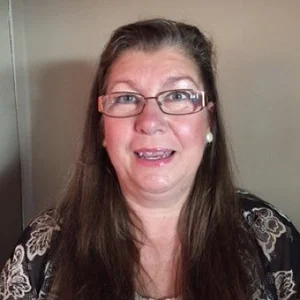
Sharon Webster is a financial coach, licensed life insurance producer, and the founder of ReCalibrate Legacy — powered by Valoram Solutions. She helps ministry leaders, business owners, and faith-rooted families build wealth that lasts beyond a lifetime. This is from Video 1 of the Iyar 5786 Series.
Abundant Life. Fruitful Ministry. Prospering Industry.